Waiter vs Busser: Differences, Duties and Career Paths
When you first enter the restaurant industry, choosing between a waiter and a busser role involves more than a job title. Both belong to the same service team, but their level of guest contact, decision-making responsibility, place in the service flow and expected experience differ. The difference is more nuanced than “one serves and the other helps”.
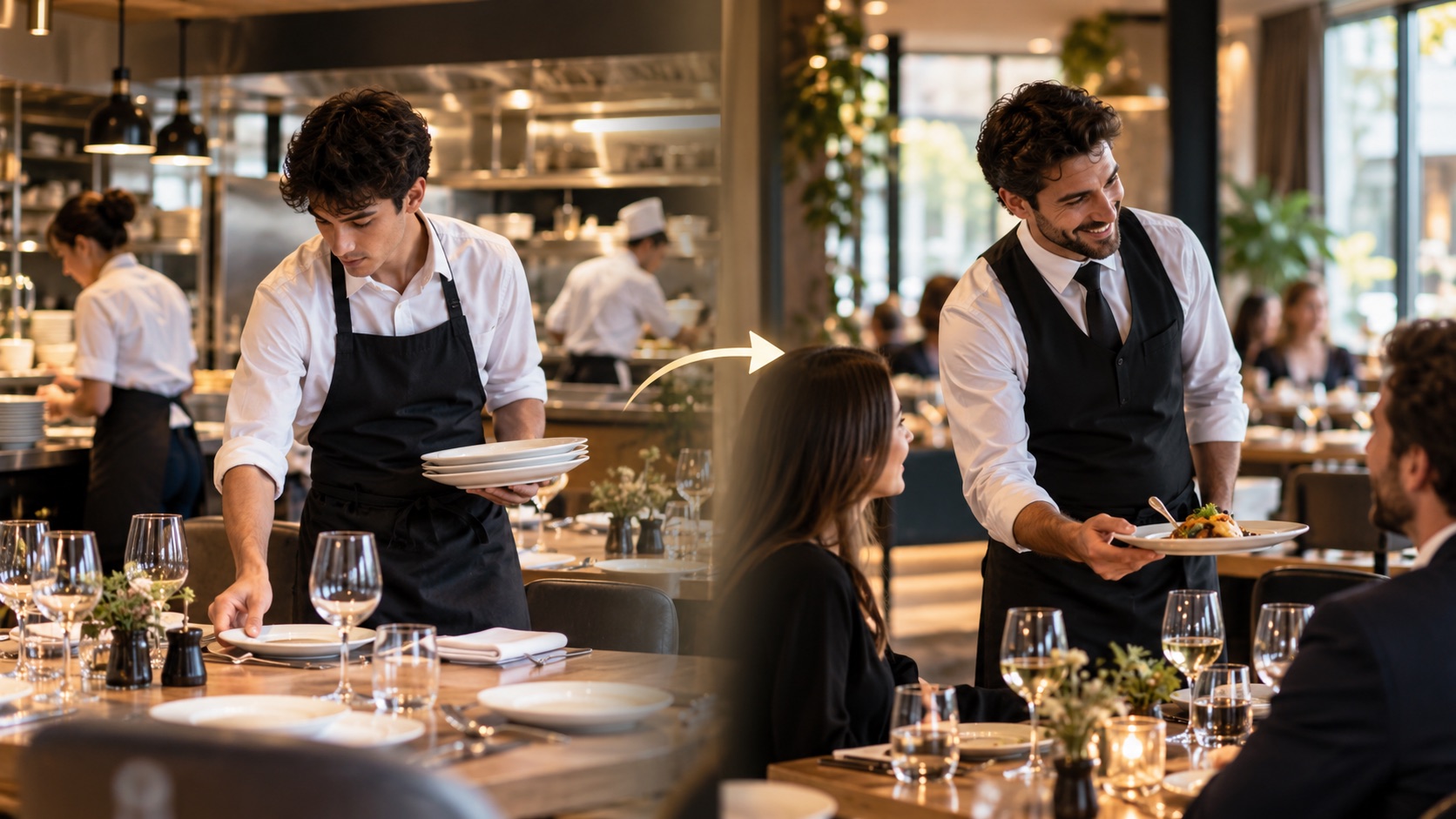
To choose the right position, first understand who does what during a shift. A busser generally prepares the dining area, helps carry food and clear tables, replenishes supplies and follows the waiter's service plan. A waiter takes more direct responsibility for orders, guest communication, table management and a consistent dining experience. Responsibilities vary with the restaurant concept, so the actual job description matters more than the title.
What Is the Difference between a Waiter and a Busser?
A waiter, also called a server, manages the main flow of table service and the guest experience. A busser, also known as a server assistant or waiting assistant in some restaurants, supports preparation, carrying, clearing and organisation so service runs smoothly. Waiters generally have greater responsibility for guest communication and orders. Bussers help maintain the speed, organisation and continuity of service.
The Difference Goes beyond Seniority
Although bussing is often an entry-level or development role, describing it only as a less senior position misses the point. The two roles have different priorities during a shift.
- The waiter tracks each table's needs and communicates directly with guests.
- The busser helps keep service stations stocked, tables prepared and food and equipment moving.
- The waiter usually takes greater responsibility for order accuracy and the sequence of service.
- The busser provides timely support so the waiter can focus on guests.
A good busser does more than carry items quickly. They understand the flow of service and anticipate what the team will need next.
How Do They Work Together during a Shift?
When guests sit down, the busser may bring water or bread or complete the restaurant's standard welcome setup. The waiter presents the menu, answers questions and takes the order. When food is ready, the busser may help carry it to the dining room, while the waiter checks that the correct dishes reach the correct guests in the right sequence. Once guests leave, both roles may help clear and reset the table.
The core distinction is responsibility: the busser supports service operations, while the waiter takes ownership of the guest's table service.
Clarifying the Terminology: A Busser Is Not a Commis Chef
The Turkish term “komi” can refer to two different roles: a front-of-house service assistant or a junior member of the kitchen team. English job titles distinguish these positions. In this guide, “busser” means the front-of-house role, also described as a server assistant or waiting assistant. The exact mix of bussing, food running and service support varies by employer.
Where Does a Busser Work?
A busser moves between the dining room, service stations, the kitchen pass and guest tables. They help set tables, prepare service equipment, clear used items, carry food and keep the dining area organised. Their duties directly support food and beverage service.
Why Is a Commis Chef Different?
A commis chef supports cooks on the food preparation side. Preparation, station organisation and kitchen production needs are the main focus. If a Turkish job advertisement uses only “komi”, check whether it means a front-of-house service assistant or a kitchen commis before applying.
What Does a Busser Do?
A busser's main purpose is to help the dining room team work efficiently and in an organised way. Details vary by restaurant, but the role generally covers preparation before service, support during service and resetting the area afterwards.
Busser Duties before Service
Before a shift begins, a busser typically helps with:
- Setting tables to the restaurant's standards
- Checking cutlery, glasses, napkins and service equipment
- Replenishing supplies at service stations
- Checking the arrangement of tables and chairs
- Making sure the dining room looks ready for guests
- Keeping equipment the waiter will need within easy reach
Well-organised preparation reduces unnecessary movement during busy periods.
Busser Duties during Service
During busy service, a busser helps maintain the flow between the kitchen and dining room. Duties may include carrying plates, clearing used items, replacing service equipment and keeping tables orderly between courses.
A good busser does not simply wait for instructions. They notice when used plates are building up, glasses are running low at a service station or a table needs resetting, and act according to the team's priorities.
Busser Duties after Service
After service, the aim is to prepare the dining room for the next service period. This may involve resetting tables, organising equipment, replenishing service stations and tidying work areas. As responsibilities depend on restaurant procedures, bussers should clarify the scope of their duties at the start of a shift.
What Does a Waiter Do?
A waiter's role extends beyond taking orders. From the moment guests sit down until they leave, the waiter monitors service, recognises needs at the right time and coordinates with the kitchen, bar, cashier and wider service team.
Guest Communication and Order Management
Waiters need thorough menu knowledge, accurate answers to guest questions and complete order records. For ingredients, unavailable dishes, portion sizes or presentation, they should use confirmed information from the restaurant rather than make assumptions.
In many restaurants, waiters are also responsible for entering orders correctly into the point-of-sale (POS) system and accurately tracking table and seat details.
Table Management and the Sequence of Service
An important waiting skill is tracking several tables at different stages of their meal. One table may be ordering while another needs main courses, drink refills or the bill.
Waiting therefore requires prioritisation, timing and operational awareness as well as communication skills.
Problem-Solving and Team Coordination
A waiter is often among the first to notice a wrong dish, delayed order or additional request. They do not have to solve every issue alone, but they are expected to contact the right person promptly, keep the guest informed and follow up until the matter is resolved.
Where Do Waiter and Busser Duties Overlap?
The responsibilities are not separated by rigid boundaries. Team members may support one another, especially in smaller restaurants or during busy periods. Both may help set tables, carry plates, clear used items and keep the dining room organised.
Why Does Doing the Same Task Not Mean Having the Same Role?
A busser does not automatically become a waiter by carrying a plate to a table, and a waiter does not become a busser by clearing used plates. The role is defined by overall responsibility throughout the shift, rather than a single task.
The waiter's focus is managing table service. The busser's focus is providing the support that keeps that service efficient and organised.
Restaurant Size Changes the Boundaries
In a small café, one employee may both take orders and clear tables. In a large hotel, duties may be divided more precisely, with a busser assigned to a particular station or group of waiters. When job hunting, read the daily responsibilities as carefully as the title.
Do Bussers Take Orders?
In many restaurants, bussers are not primarily responsible for taking orders; that duty usually belongs to waiters. However, in smaller businesses, during training or when specifically authorised, a busser may help with limited ordering tasks. The restaurant's job description and delegated authority determine the scope of the role.
Why Is Taking an Order More than Writing It Down?
Taking an order requires menu knowledge, accurate explanations of available options, clear recording of special requests, correct table numbers and error-free submission to the system. A common development path is to teach an inexperienced busser the service routine before gradually introducing ordering responsibilities.
How Do You Know the Limits of Your Authority?
When you start a role, make sure you know the answers to these questions:
- Who takes orders?
- Who enters them into the POS system?
- Who approves changes or cancellations?
- Who brings the bill or handles payment?
- Who first responds to complaints, and when should a manager become involved?
Clarifying these points reduces role conflicts and helps new employees understand what they need to learn.
Do Bussers Clean?
Bussers help maintain order and hygiene in service areas. Preparing table surfaces for guests, clearing used items, tidying service stations and helping make an area safe after a spill may all form part of the role. General cleaning, dishwashing and specialist cleaning duties, however, depend on the restaurant's separate job descriptions.
Service Area Upkeep Is Different from General Cleaning
Preparing a table for the next guests is part of service operations. Cleaning all floors, cleaning toilets or running the dishwashing area may belong to other roles. Responsibilities can overlap in smaller businesses, so discuss the scope of the job before starting.
Why Is “The Busser Does Everything” the Wrong Approach?
A busser has a support role, but that does not mean the position has no boundaries. In a well-organised team, responsibilities are agreed in advance. Clear task allocation helps employees understand expectations and decide what to prioritise during busy periods.
Which Role Suits You Better: Waiter or Busser?
Rather than choosing solely by pay or title, consider your experience, confidence communicating with guests, service knowledge and learning goals.
If You Are New to Restaurants
If you are unfamiliar with restaurant operations, table numbers, service sequences, tray handling, kitchen communication and busy service periods, bussing can be a strong starting point. It lets you learn how operations work without immediately taking full responsibility for guest service.
If You Are Confident Communicating with People
Waiting may suit you if you communicate comfortably with guests, keep track of several requests and are willing to take responsibility. Communication alone is not enough, however: menu knowledge, service discipline and reliable follow-through also matter.
Consider the Physical Demands
Both roles can involve long periods standing and moving quickly during busy service. Bussing may involve more carrying and movement between the kitchen and dining room. Waiting combines physical demands with continuous guest communication and the mental task of monitoring several tables.
Can You Progress from Busser to Waiter?
Yes. Moving from busser to waiter is a common restaurant career path. A busser who learns service routines, table management, the menu and team coordination can gradually take on more table responsibility as their product knowledge, communication skills and operational reliability develop.
Signs You Are Ready to Become a Waiter
You may be approaching the next role if you can consistently:
- Maintain tables and service stations without constant reminders
- Demonstrate knowledge of menu items and basic service details
- Set the right priorities during busy periods
- Anticipate what the waiter will need next
- Communicate briefly and professionally with guests
- Report mistakes promptly rather than hide them
- Show readiness to learn the POS system and ordering process
Promotion depends on reliably handling greater responsibility, rather than time served alone.
A Learning Plan for Progressing from Busser to Waiter
You can follow a simple four-stage plan:
Learn the operation: Understand table numbers, service stations, the kitchen pass and the team's communication signals.
Learn the menu: Study dish names, main ingredients, presentation and the restaurant's latest confirmed product information.
Develop communication skills: Practise welcoming guests, giving brief explanations, confirming requests and passing information to the right person.
Take on supervised responsibility: Gradually become involved in table management and ordering under the guidance of an experienced waiter or manager.
This approach helps you demonstrate waiting skills before your job title changes.
What Should a New Starter Learn in the First Few Weeks?
The aim of the first week is to understand how service works, rather than memorise everything. Employees who progress quickly learn why tasks happen in a particular order as well as how to perform them.
Table Numbers and Service Station Layout
Not knowing a table's location may seem a small issue, but taking a dish to the wrong table directly affects service quality. Learning the floor plan, table numbers and equipment layout early makes a significant difference.
Basic Menu and Product Knowledge
Menu knowledge is essential for waiters. For bussers, recognising dishes also reduces errors when carrying and serving them. A professional approach is to avoid guessing about ingredients and check with the right colleague, particularly when guests have special requests.
Clear, Brief Team Communication
Busy service calls for short, clear messages that colleagues can confirm. Statements such as “Drinks for table 12 are ready”, “Table 8 can be cleared” or “Which table is this dish for?” reduce the chance of mistakes.
Does the Waiter–Busser Distinction Change by Restaurant Type?
Yes. The service model, number of tables, menu and team size determine how clearly responsibilities are divided. Bussing experience in a café may therefore differ substantially from a server assistant role in fine dining.
Cafés and Quick-Service Concepts
Teams may be smaller and roles may overlap more. In some businesses, a busser may also help with takeaway orders, the till or quick table resets. Waiters may be responsible for more tables at once.
À la Carte and Busy Full-Service Restaurants
Table management, course sequencing, coordination at the kitchen pass and continuous service support become more prominent. The division between waiter and busser duties may be more clearly defined to keep operations moving.
Hotels, Banqueting and Event Service
Duties may be allocated by station, room or event plan. Some events recruit waiters and service assistants together, but setup, large-scale meal service, clearing and room turnaround can differ from standard restaurant service.
What Should You Check in a Combined Waiter/Busser Job Advertisement?
Some advertisements use both titles together. To understand the actual role, check the job description, required experience, shift pattern and expected level of guest interaction.
Questions to Ask before Applying
These interview questions can quickly clarify the role:
- Is this a busser/server assistant role, a waiter role, or does it change by shift?
- Does the role include taking orders and using the POS system?
- Which service section will I be responsible for?
- How many waiters and bussers work on each shift?
- Which tasks will I start with during training or the trial period?
- What criteria does the restaurant use when promoting a busser to waiter?
These questions reduce uncertainty about what you will actually do once you start.
Which Clues Should You Look for in the Job Description?
Phrases such as “table preparation”, “clearing”, “service support” and “following waiter instructions” usually suggest a busser role. “Taking orders”, “table management”, “guest satisfaction”, “POS” and “billing” point more strongly towards a waiter position. The employer's specific job description remains the deciding factor.
How Can You Stand Out When Applying for Waiter or Busser Jobs?
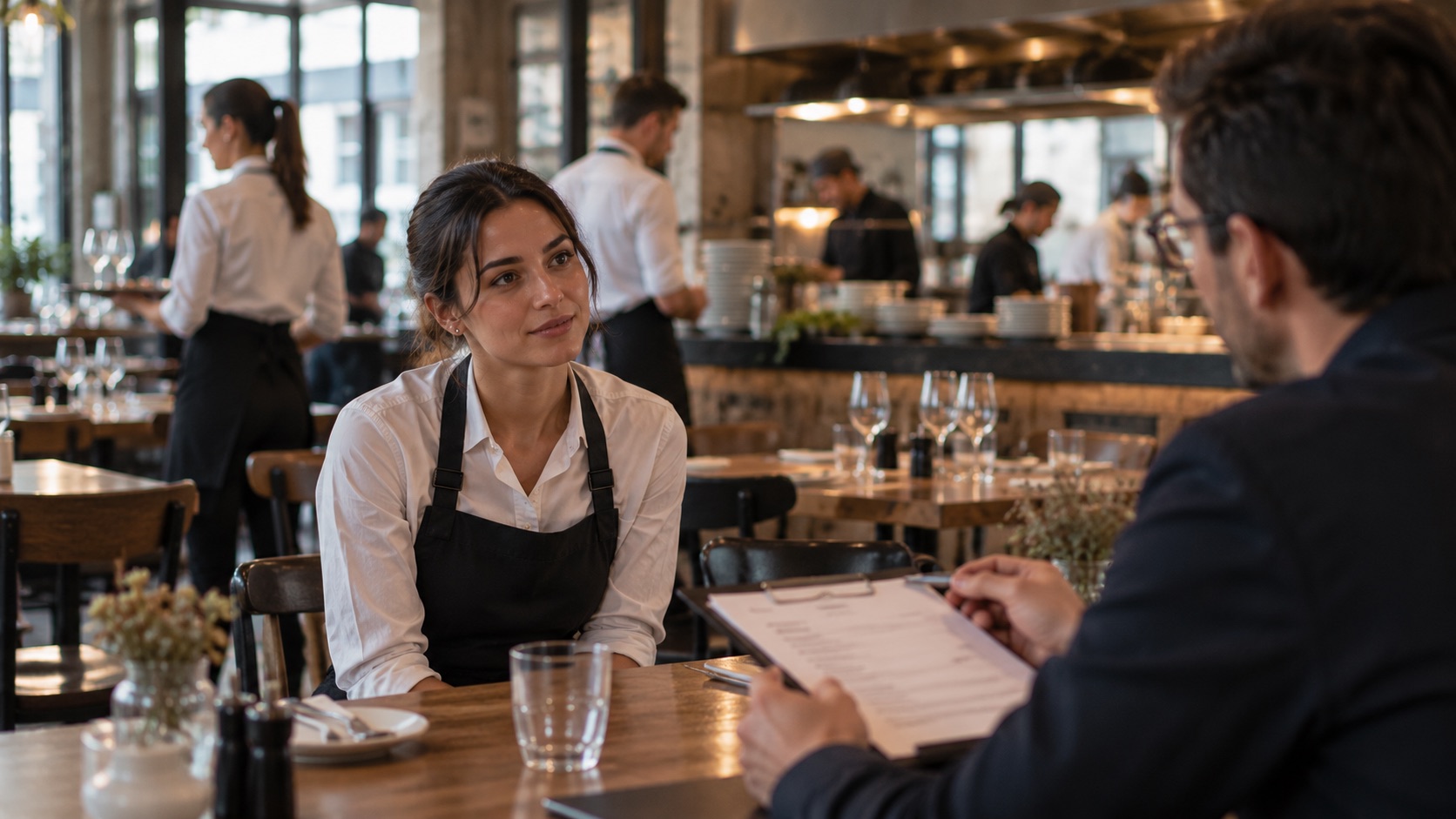
Restaurant hiring considers communication, attitude, ability to handle the pace and approach to service as well as previous employers. Candidates with limited experience can present a clearer picture of their abilities by using concrete examples of their work and working style.
What Should Busser Candidates Highlight?
Busser candidates can demonstrate teamwork, attention to detail, organisation, speed, willingness to learn and the ability to handle busy conditions. Instead of simply saying “I work quickly under pressure”, explain how you managed several tasks at school, an event, an internship or another job.
What Should Waiter Candidates Highlight?
Waiter candidates can emphasise guest communication, ability to learn product information, order accuracy, problem-solving and table management. A short example of handling a complaint or prioritising tasks during a busy shift communicates more than a list of duties.
In hospitality, a written CV may not fully convey how a candidate communicates. A video CV can help candidates explain their experience, personality and working approach more directly.
How Do You Choose the Right Waiter or Busser Job?
A useful advertisement does more than say “staff wanted”. It explains the role, location, working arrangements and candidate expectations as clearly as possible. If you are new to the industry, prioritising jobs with clear responsibilities and learning opportunities can help you make a more informed choice.
Match the Job Title to the Actual Work
An advertisement titled “waiter” may mainly describe preparation and carrying tasks. A “busser” advertisement may expect guest management skills at an experienced waiter's level. Base your decision on the duties rather than the headline.
Check That the Role Supports Your Career Goals
If you want to become a waiter, a restaurant that provides training, opportunities to take on new duties and a structured service system may offer more room to develop. If you are seeking short-term work, shifts, transport, employment arrangements and the scope of duties may matter more.
You can explore more guides to restaurant careers, applications and hospitality recruitment on the CatchJobs Blog.
Choose the Right Starting Point for Your Restaurant Career
Waiters and bussers work in the same service team, but their responsibilities and priorities differ. Bussers support preparation, carrying, clearing and organisation. Waiters take more direct responsibility for guest communication, orders, table management and the dining experience.
If you are new to restaurants, bussing can provide a strong foundation for learning operations and preparing to become a waiter. If you already have experience, menu knowledge and confident guest communication skills, a waiter role may suit you directly. To choose well, look at the employer's actual job description and expectations rather than the title alone.
Explore hospitality opportunities on CatchJobs to find waiter or busser jobs suited to your experience. Use your profile and video CV to show employers both where you have worked and the kind of team member you will be.