Waiter Interview Questions: A 2026 Guide for Hiring Employers

Well-designed interview questions reveal a waiter candidate's real potential with a clarity no paper CV can match.
The success of a restaurant or hotel depends as much on the competence of its front-of-house team as on the flavour coming out of the kitchen. Hiring the wrong waiter means high staff turnover, falling guest satisfaction and a hiring cost that keeps coming back. The right interview questions, on the other hand, reveal a candidate's real potential with a clarity a paper CV can never offer. In this guide we cover waiter interview questions end to end: from preparation to scenario-based evaluation, from red flags to a scoring system.
Why Does Asking the Right Questions Matter So Much in a Waiter Interview?
Asking the right questions in a waiter interview reveals less about a candidate's technical knowledge and more about how they behave under stress, how they communicate with guests and how they position themselves within a team. A well-structured interview largely prevents the mismatches and early resignations that would otherwise surface after hiring.
The Cost of a Bad Hire to the Business
High turnover in the front-of-house team is not just the hassle of re-advertising and interviewing again; the drop in service quality while new staff settle in, the time experienced team members spend on training and potential lost guests all reach the business as indirect costs. Candidates who were not questioned in enough depth at the interview stage may tend to leave within a few weeks of starting.
The Limits of a Paper CV in Evaluating Waiter Candidates
A CV shows which venues a candidate has worked at, but it never tells you how they smile at a guest, how calm they stay on a busy evening or how they handle a complaint. That is why employers who bring the What Is a Video CV? Hospitality Hiring approach into their hiring process get a realistic sense of a candidate's energy and communication style before they even sit down at the interview table.
Before the Interview: Building the Right Candidate Pool
A good interview starts with good preparation. Filtering the candidates you invite with the right criteria from the start reduces wasted time during the process and minimises interviews with people who are not a fit for the role.
Criteria to State in the Job Advert
The clarity of the advert directly affects the quality of the candidates who turn up to interview. Stating details such as shift hours, expected experience, foreign language requirements and the venue's service style clearly in the advert means candidates whose expectations do not match are filtered out at pre-screening. For a step-by-step walkthrough, the How to Write a Waiter Job Description guide helps you shape your advert so your hiring funnel works as efficiently as possible.
Using Video Profiles for Pre-Screening
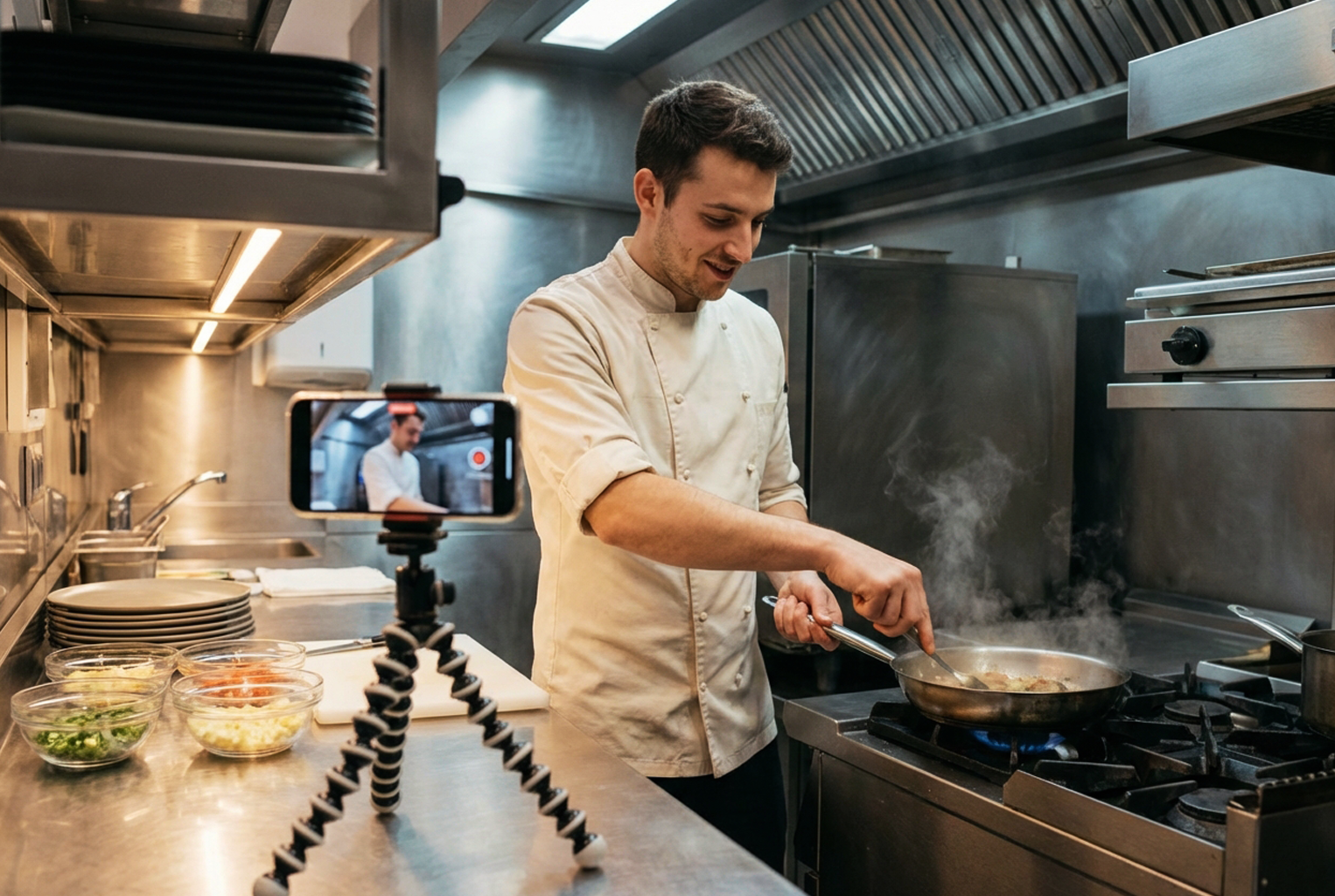
Asking candidates for a short video profile before inviting them to interview lets the hiring team spend its time only on candidates who genuinely look suitable. Video profiles offer a preview of pronunciation, energy and presence in front of guests before the interview, and accurately narrow down the number of candidates invited to meet in person.
Choosing the Interview Format: One Stage or Several?
For a small single-site business, a one-stage interview is usually enough. For businesses with several sites or high-volume service, assessing general fit in the first stage and running a scenario-based evaluation with the floor manager in the second stage noticeably reduces the risk of a bad hire.
Core Waiter Interview Questions: Experience and Motivation
The backbone of any list of waiter interview questions is made up of questions that aim to understand the candidate's past experience and why they want to work in this industry. These questions are not enough on their own, but they put the conversation on a solid footing.
Questions About Experience and Past Performance
- What was your daily workflow like at your previous venue, and how were tables divided within the team?
- Can you describe your busiest day — what happened that day?
- Can you tell me about a time you made a mistake with an order and how you made up for it?
- How much experience do you have with POS systems and the order-to-bill process?
Questions That Measure Motivation and Commitment to the Industry
- Why do you choose to work as a waiter, and what motivates you in this job?
- Why did you choose this venue over others?
- Where do you see yourself in this position a year from now?
As well as the content of the candidate's answers, the tone and body language they use while answering should also be assessed; in hospitality, attitude is often as decisive as technical knowledge.
Situational (Scenario-Based) Waiter Interview Questions
Scenario-based questions measure not a candidate's level of knowledge but how they would behave in a real crisis. When these questions are asked in a "what would you do" format, the candidate's reflexes and prioritisation skills come through clearly.
Stress Management Questions for Peak Hours
- Five tables want something from you at the same time and an order from the kitchen is running late; how do you prioritise?
- Your shift partner did not turn up today and your section is busier than usual; what approach do you take?
- What do you do when a large walk-in group clashes with a table that was reserved in advance?
Guest Complaints and Difficult Guest Scenarios
- A guest is loudly complaining that they are unhappy with their meal; how do you handle the situation without disturbing the other guests at the table?
- What steps do you take when there is a dispute over the bill, and when do you inform a manager?
Hygiene, Allergen and Food Safety Questions
- A guest tells you they have a peanut allergy; how do you pass the order to the kitchen and what checks do you make?
- Which habits do you consider important for complying with hygiene rules during service?
The answers to these questions show not only the candidate's level of knowledge but also their ability to take responsibility under pressure and to communicate with the right person at the right time.
Questions That Assess Personality and Team Fit
The front-of-house team is the bridge between the kitchen and the guest; that makes personality fit as critical a hiring criterion as technical skill.
Assessing Communication Skills and Body Language
- How would you communicate with a guest who is clearly having a hard day?
- If you had to use your foreign language skills in a real service scenario, how would you go about it?
Teamwork and Cross-Department Fit
- How do you step in when communication breaks down between the kitchen and the floor?
- What is the first thing you would teach a new team member?
Paying attention to whether the candidate uses "we" language or "I" language in their answers gives a strong clue about team fit.
Red Flags to Watch for During the Interview
Some answer patterns give an early warning about a candidate's suitability for the job. The following points should be noted in particular during the interview:
- Consistently speaking negatively about previous employers
- Giving consistently "I"-centred answers to questions about teamwork
- Placing all responsibility on the other party in difficult guest scenarios
- Showing a clear unwillingness to work shifts, weekends or peak periods
- Treating hygiene and allergen questions superficially or indifferently
A single red flag is not enough to rule a candidate out automatically; however, seeing several signals together calls for a more thorough approach to reference checks.
Evaluating Waiter Candidates Objectively: Scoring and the Decision Process
The post-interview decision should rest on a structured evaluation rather than on impressions. Otherwise, different interviewers assessing candidates against different criteria leads to inconsistent hiring quality.
Building Structured Evaluation Criteria
Scoring every candidate against the same five or six criteria (communication, stress management, hygiene awareness, team fit, experience, motivation) reduces the influence of the interviewer's subjective impressions on the decision. It is recommended that these criteria are written down before the interview and applied in the same way by every interviewer.
Pre-Interview Screening with a Video CV
Reviewing a candidate's video profile before sitting down at the interview table means the face-to-face time goes on in-depth scenario questions rather than basic ones. A profile prepared in line with the criteria described in the How to Prepare a Video CV guide also gives an early indication of the candidate's presentation skills.
After the Interview: Reference Checks and a Trial Shift
The interview is only one stage of the hiring decision. Especially for waiting staff, a role with a lot of guest contact, two steps taken after the interview noticeably improve the accuracy of the decision.
Questions to Ask During a Reference Check
Rather than only confirming employment dates with a previous employer, asking about the candidate's performance during busy periods, their attitude within the team and, if relevant, their reason for leaving lets you concretely confirm — or question — the impression you formed in the interview.
How a Trial Shift Supports the Hiring Decision
Where possible, scheduling a short paid trial shift lets you observe directly how the skills described in the interview translate to a real service environment. Especially in busy, high-standard venues, this step is one of the most reliable ways to verify a candidate before the final decision.
Completing the Team: A Holistic Approach to Restaurant Staff Selection
A waiter interview fills only one part of a restaurant team. For the floor, the kitchen and management to work together as a whole, the hiring strategy needs to look at the entire team rather than a single position. The Restaurant Staff Recruitment: Building the Right Team guide offers a practical framework for fitting waiter interviews into a wider hiring strategy.
Frequently Asked Questions
What is the most common question in a waiter interview?
The most common question is the experience question that asks the candidate to describe the difficulties they faced during a busy shift and how they overcame them. This question reveals stress tolerance as much as technical knowledge.
What questions should you ask an inexperienced waiter candidate?
With inexperienced candidates, scenario questions that focus on their behaviour in any setting requiring service, customer care or teamwork (an internship, a part-time job, volunteering) give more reliable results than questions about past jobs.
How long should a waiter interview last?
Although it depends on operational workload, a waiter interview covering core questions, scenario-based questions and a two-way Q&A usually works well at 20-30 minutes.
How does a video CV make the waiter interview process easier?
A video CV gives an idea of the candidate's communication style and energy before the interview, making interview invitations more accurate and letting the face-to-face interview focus on in-depth evaluation rather than basic questions.
Conclusion
The better designed the questions asked in a waiter interview, the more accurate the hiring decision. Businesses that apply the approach covered in this guide — from experience questions to scenario-based evaluations, from red flags to structured scoring and reference checks and trial shifts — both reduce staff turnover and increase guest satisfaction. CatchJobs' video CV-focused platform makes this process faster and more accurate by letting you see a candidate's real potential before you sit down at the interview table.
Browse other topics: