Restaurant Staff Recruitment: How to Hire the Right Waiters and Kitchen Staff

Hiring the right people directly shapes service quality and the consistency of daily restaurant operations.
A great restaurant experience is shaped by more than the menu, location or concept. From the waiter speaking directly with guests to the kitchen team keeping service moving, employees are a central part of the overall customer experience. That is why restaurant staff recruitment is not simply about filling an open role. It is a strategic process that directly affects service quality, team productivity and the consistency of day-to-day operations.
Hiring in food and beverage also comes with its own pressures: urgent staffing needs, shift-based schedules, seasonal peaks and high-volume service periods. Employers often need to recruit quickly while still identifying candidates who genuinely fit the role.
So what should employers look for when hiring restaurant staff? How do you hire the right waiter? How can you find skilled kitchen staff? And can candidates be assessed more effectively than through a traditional CV alone? Below, we explore the key criteria that can make the restaurant recruitment process more focused, efficient and relevant to the realities of hospitality.
Define the Role Clearly Before You Start Restaurant Staff Recruitment
An effective restaurant hiring process starts with defining the position clearly before the candidate search begins. Generic descriptions such as "waiter wanted" or "kitchen staff needed" rarely explain what the business actually requires.
A waiter responsible for a high-volume 30-table section will need a different skill set from waiting staff working in a fine-dining environment. The same applies in the kitchen. A commis chef, chef de partie and head chef have different responsibilities, experience requirements and roles within the operation.
Before recruitment begins, employers should define the following as clearly as possible:
- Role responsibilities and daily duties
- Working hours and shift pattern
- Required level of experience
- Restaurant concept and service style
- Service model
- Team size and reporting structure
- Technical skills required for the role
- Language requirements
- Ability to work in a fast-paced environment
- Salary, tips, bonuses and benefits
- Expected start date
The clearer the role is, the easier it becomes to reduce unsuitable applications and keep restaurant staff recruitment focused on candidates who match the actual needs of the business.
7 Key Criteria for Restaurant Staff Selection
Experience with recognised restaurants or hospitality brands can be valuable, but experience alone does not determine whether someone is the right hire. Restaurant employers get a stronger view of a candidate when they assess several criteria together rather than relying on one line of a CV.
1. Relevant experience for the role
Look beyond the total number of years a candidate has worked in hospitality. Consider the positions they held, the type of restaurants they worked in and the level of responsibility they managed. Details such as section size, a la carte, buffet or fine-dining experience, high-volume service, POS systems and kitchen station experience often reveal more than a simple statement such as "3 years of experience."
2. Communication skills
Communication is especially important for front-of-house teams. The way an employee speaks with guests can directly influence how the restaurant brand is perceived. Assess whether the candidate communicates clearly, listens well, works constructively with colleagues and stays professional in difficult situations.
3. Ability to perform under pressure
The pace of restaurant operations can change quickly during the day. At peak service times, candidates may need to manage several priorities at once. The key is not only speed, but the ability to stay organised, accurate and composed under pressure.
4. Teamwork
Restaurant performance depends on coordination across front of house, kitchen, bar and operations. Strong candidates should be able to work within a shared workflow, communicate with colleagues, support the team when needed and manage their own responsibilities reliably.
5. Problem-solving skills
No two services run exactly the same way. An order may be delayed, a reservation issue may arise or a guest may make an unexpected request. Employers should therefore evaluate not only whether a candidate knows the standard procedure, but how they think and respond when the situation changes.
6. Learning and adaptability
Every restaurant has its own menu, service standards, systems and workplace culture. Even experienced employees need to learn new processes when joining a new business. Openness to learning and the ability to adapt are particularly important for employers looking to build stable, long-term teams.
7. Culture and team fit
A technically strong candidate is not automatically the right candidate for every restaurant. Communication style, work discipline and overall approach should also align with the existing team and the expectations of the business.
How Do You Hire the Right Waiter?
"How do you hire the right waiter?" is one of the most common questions restaurant employers face during recruitment. In many businesses, waiting staff have more direct contact with guests than almost any other employee. That means waiter recruitment should assess more than tray carrying, table setup or order-taking experience.
When screening waiter candidates, employers can assess the following areas:
- Guest communication: Can the candidate communicate with guests in a professional, natural and solution-focused way?
- Menu learning: Can they learn products, ingredients, allergens, specials and relevant food or beverage pairings?
- Order and table management: Can they manage multiple tables, prioritise tasks and maintain accuracy during service?
- Sales ability: Can they understand a guest's needs and make relevant menu or product recommendations without sounding forced?
- Complaint handling: How do they respond when a guest has an unexpected request or a negative experience?
- Service discipline: Can they follow service standards, personal hygiene requirements and restaurant procedures consistently?
The goal is not to find the "best waiter" in general, but the waiter who best matches the restaurant's concept, service model and team.
What interview questions should you ask a waiter candidate?
Alongside standard interview questions, realistic service scenarios can help employers understand how a candidate thinks and communicates in situations they may actually face on shift.
- "During a busy service, two tables call you at the same time. How would you decide what to prioritise?"
- "A guest says their order is taking too long. How would you handle the conversation?"
- "A guest asks for something that is not on the menu. What would you do?"
- "Tell us about the busiest service you worked during in your previous role."
Rather than looking for one perfect answer, evaluate the candidate's reasoning, communication style, prioritisation and approach to solving the problem.
How to Find Skilled Kitchen Staff
Finding skilled kitchen staff is one of the most critical areas of restaurant recruitment. For kitchen roles, years of experience matter, but technical ability, consistency and operational discipline are equally important.
Depending on the role, employers can assess the following areas:
| Assessment area | What to look for |
|---|---|
| Technical skills | Station knowledge, production techniques and recipe execution |
| Hygiene | Food safety and personal hygiene standards |
| Mise en place | Pre-service preparation and organisation |
| Speed | Ability to maintain pace during busy service |
| Organisation | Ability to keep the workstation structured and controlled |
| Team coordination | Communication and coordination with the chef and kitchen team |
| Standards | Consistency with recipe, portion and presentation standards |
| Time management | Completing tasks in the right order and at the right time |
Where possible, kitchen candidates should not be assessed only through a verbal interview. A role-appropriate practical assessment or trial can provide a clearer view of technical ability, organisation and standards.
Is a CV Enough for Restaurant Recruitment?
A traditional CV remains useful for reviewing a candidate's employment history, education and previous workplaces. However, some of the qualities that matter most in hospitality recruitment are difficult to understand from a CV alone.
How a candidate presents themselves, communicates, explains their motivation, describes their experience and responds to a role can often become clear only later in the interview process. For that reason, a CV can be treated as the starting point of restaurant staff recruitment rather than the only assessment tool.
How Can Video CVs Support Restaurant Recruitment?
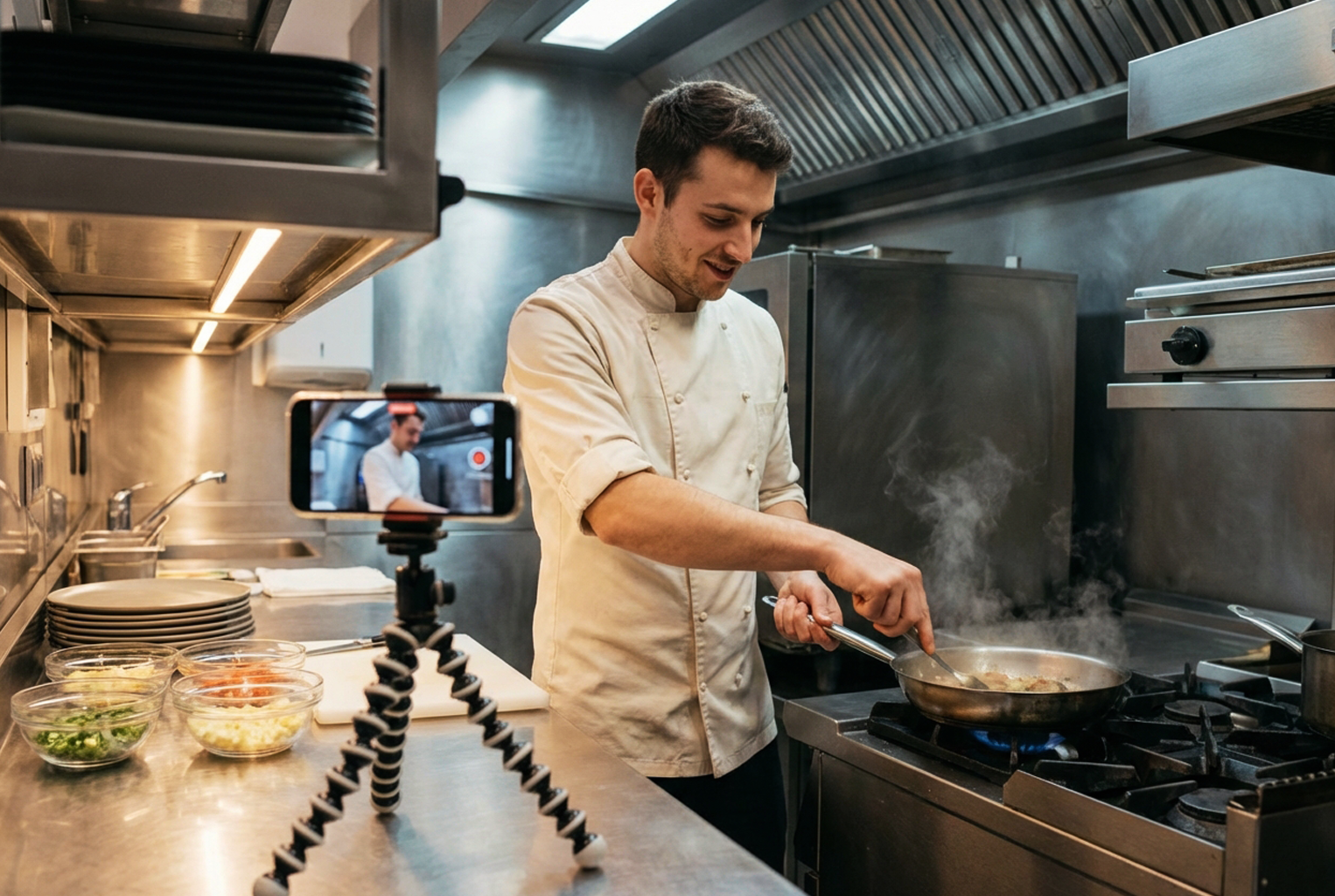
Video CV recruitment can help employers form an earlier impression of candidates, particularly for hospitality roles where communication and presentation are part of the job.
A traditional CV shows where a candidate has worked. A Video CV can also show how the candidate introduces themselves, describes their experience and communicates in their own words. Video CVs can be especially useful for:
- Assessing communication for front-of-house roles
- Pre-screening candidates for roles requiring a second language
- Reviewing high volumes of applications more efficiently
- Hearing candidates describe their experience in their own words
- Building a clearer first impression before an interview
For example, a restaurant receiving hundreds of applications can use a combination of CV information and Video CVs to identify relevant candidates earlier instead of building an unnecessarily long interview list. This can make the restaurant recruitment process more focused while helping hiring teams spend time on candidates with stronger role fit.
Common Restaurant Recruitment Mistakes
Writing a job description that is too general
If duties, shifts and expectations are unclear, the advert may attract a higher number of irrelevant applications.
Focusing only on years of experience
Five years of hospitality experience does not automatically mean that a candidate is suitable for a specific restaurant, concept or team.
Ignoring team and culture fit
A technically capable employee who cannot adapt to the team structure can still have a negative effect on service and operations.
Leaving recruitment until the last minute
Urgent staffing needs can push important screening and assessment criteria into the background and increase the risk of a poor match.
Overlooking the candidate experience
Recruitment is a two-way evaluation. While the employer assesses the candidate, the candidate is also evaluating the employer. Clear information about salary, shifts, responsibilities and working conditions can improve the likelihood of a stronger match.
Hire Quickly or Hire the Right Person?
Restaurant recruitment sometimes needs to move very quickly, particularly when vacancies directly affect service capacity. Speed and quality do not have to be competing goals.
A more effective hiring system follows a clear path: reach relevant candidates → filter for role fit → assess candidates against the right criteria → accelerate the best matches. The objective is not to collect the highest possible number of CVs. It is to reach candidates who genuinely match the role and the restaurant.
Why Does the Right Restaurant Staff Selection Matter?
A poor hire does not only mean publishing another job advert or repeating interviews. It can also affect:
- The workload of the existing team
- Service quality
- Operational efficiency
- Management time
- Guest experience
and ultimately the consistency of the restaurant operation. Restaurant staff recruitment is therefore more than an HR task. It is an important part of protecting service standards, operational quality and the guest experience.
Manage Hospitality Recruitment More Effectively with CatchJobs
Finding the right employees for restaurants, hotels and hospitality businesses starts with reaching relevant candidates and evaluating them against the requirements of the role. CatchJobs brings employers and hospitality professionals together on a platform focused on service-sector recruitment.
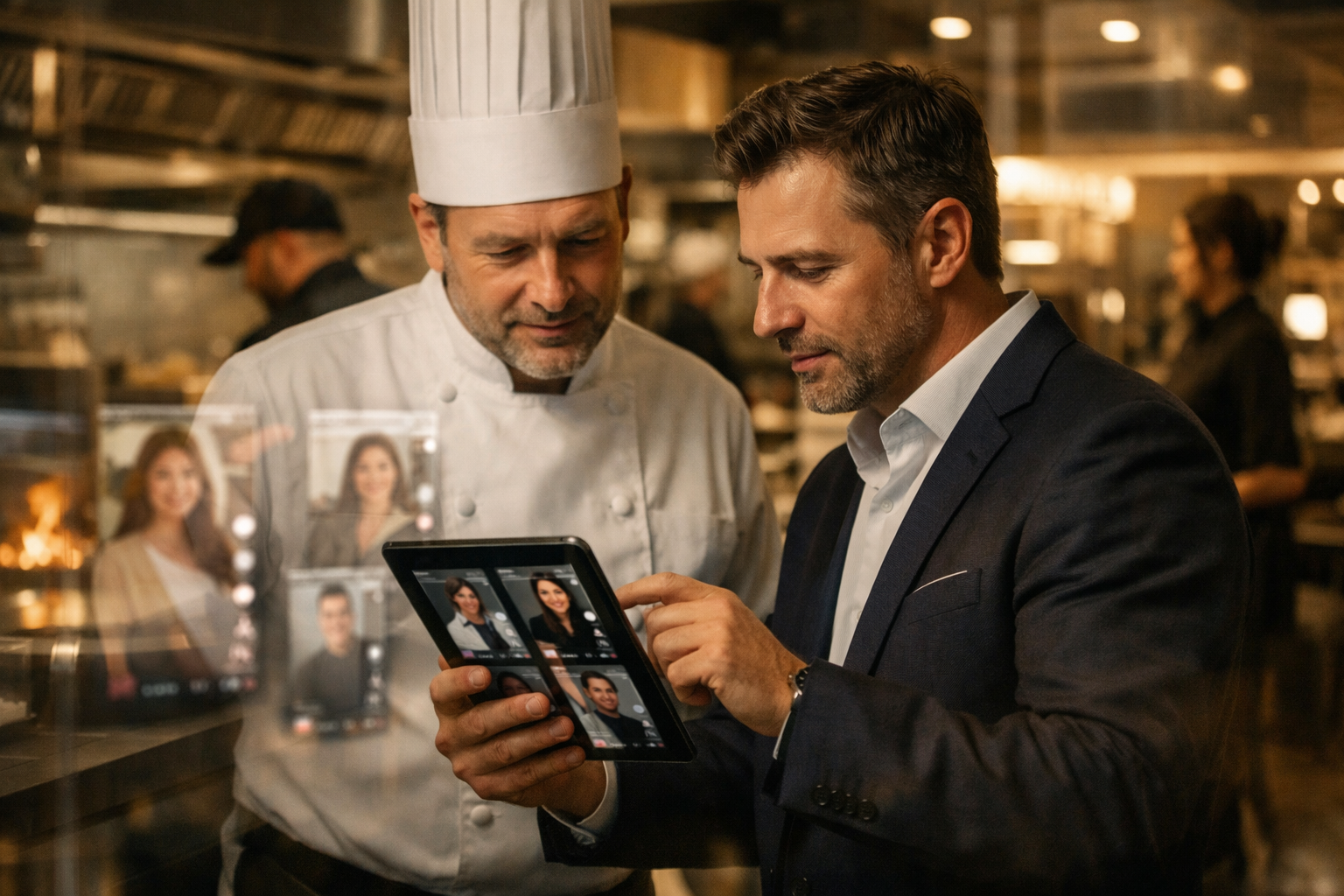
Employers can publish vacancies, review relevant candidate profiles and use features such as Video CVs to understand applicants beyond the information shown in a traditional CV. The goal is not simply to generate more applications, but to make the match between employer and candidate more relevant and efficient.
If you are building the right team for your restaurant, publish your vacancy through CatchJobs and reach hospitality-focused candidates.
Frequently Asked Questions
What should employers look for when hiring restaurant staff?
Restaurant employers should assess relevant experience, communication skills, technical ability, teamwork, performance under pressure and alignment with the restaurant's culture and service model.
How do you hire the right waiter?
Look beyond hospitality experience alone. Assess guest communication, order and table management, problem-solving, menu learning, sales awareness and the candidate's ability to follow service standards.
How can restaurants find skilled kitchen staff?
Define the role and responsibilities clearly, then assess candidates for technical skill, food safety and hygiene, mise en place, time management, team coordination and experience in busy services.
How can a Video CV be used in restaurant recruitment?
A Video CV lets candidates present their experience in their own words. For restaurant and hospitality positions where communication matters, it can support early-stage screening before the first interview.
How can restaurants speed up the hiring process?
Clear job adverts, hospitality-focused candidate pools, consistent pre-screening criteria and digital tools such as Video CVs can help restaurants reduce unnecessary interviews and move suitable candidates through recruitment more efficiently.
Browse other topics: