The People behind Dutch Hospitality: Reoewein Niesten, Conceptional
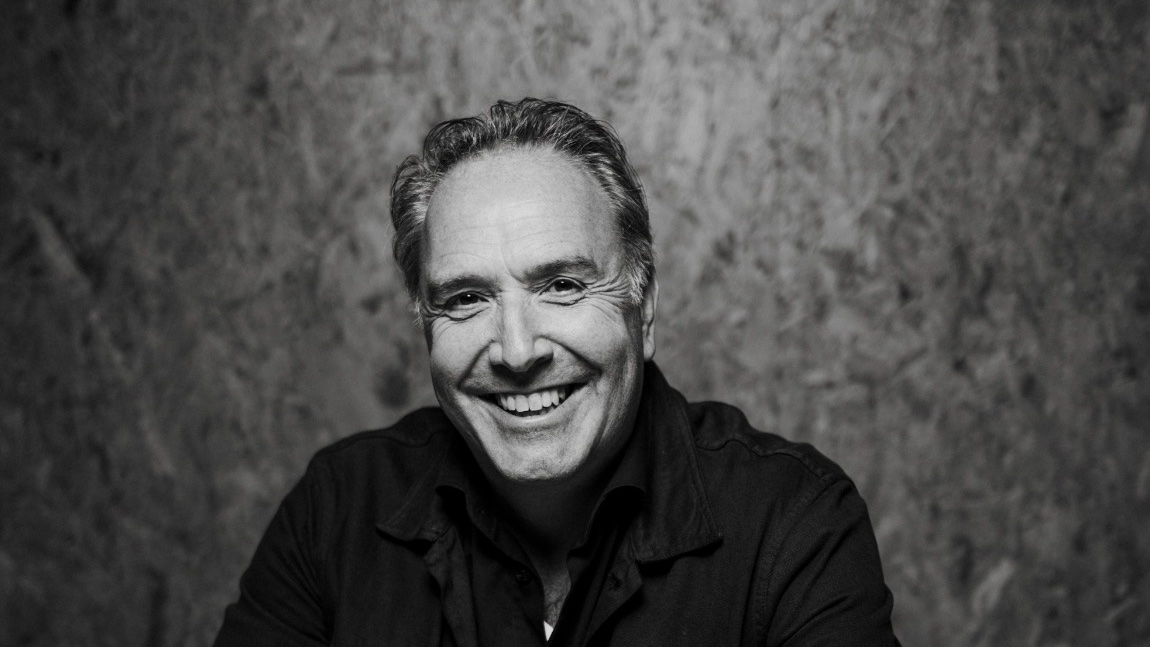
Reoewein Niesten, CEO & founder of Conceptional: "Think big. Connect personally."
"The People behind Dutch Hospitality" is a CatchJobs interview series with the people who shape the sector. In this edition, George Kanis, Country Lead NL at CatchJobs, talks to Reoewein Niesten, CEO & founder of Conceptional: 400+ projects in 27 countries. Think big. Connect personally.
Interview by George Kanis, Country Lead NL, CatchJobs · 14 September 2026
A world of hospitality
George: You have completed over 400 projects in 27 countries. Could you tell me more about that?
Reoewein: Of course. My background is in food and drink. I first worked in operations, then in development, including for an American company. I did that in the Netherlands, but mainly internationally. Then I started Conceptional.
Our first projects focused on concept development and masterplanning. That might mean planning an airport, theme park, railway station or shopping centre: which food and drink outlets belong where, and for whom? Our work has since broadened. We also work on sustainability, including projects for the Efteling and Schiphol, and on strategy and transformation.
Many positive things are happening in food and drink, but staffing and margins are under pressure. As a result, the issues we deal with are very different. Through my earlier international work, I built up a network in places including America, India, the Middle East, South America and Europe. People know our work and know what they can call on us to do. That is how we became involved in projects in so many countries. We have now worked on more than 400 projects. At the moment, around 20 are running at the same time.
George: Is that roughly the average number of ongoing projects?
Reoewein: It varies. Sometimes fewer, sometimes more. It depends on their size, duration and location. We have had around 18, but also about 30. A large project in Korea, for example, needed sustained attention. It combined leisure, a theme park and retail, with around 95 food and drink outlets.
We also take on many smaller assignments. Size alone does not decide whether a project suits us. Often it is the distinctive nature of the brief and its international character.
What makes work worthwhile? Entrepreneurship and staffing
George: I come from hospitality myself, though I was away from it for a while. Seeing the scale of your work made this conversation even more interesting to me. Many hospitality businesses revolve around an owner who works on the floor. Yet you often hear that times are tough. Finding and keeping staff is a recurring issue. Recruitment takes time and money, and owners regularly tell me that people leave for just one euro more an hour. Do you recognise that?
Reoewein: Yes, though it varies greatly by organisation. We work with operators who have several locations. Sometimes we deliberately choose a smaller owner with whom we have a real connection, though our services are not always affordable for the smallest businesses.
With staff, the key question is: how do you create a sense of belonging? That is difficult, because attitudes to work have changed. I do not mean better or worse, just different. Some of our people have been with us for 10, 14 or even 16 years, while others move on after two or three.
Conditions in hospitality also vary. Talking to an owner in Amsterdam is very different from talking to one in a small village in Friesland.
You also need to look at what you offer. If someone travels 45 minutes to an hour to work just four hours, that is simply not an attractive proposition. Many factors come together. Staffing is under pressure, but so is the cost structure. Revenue is often there; what matters is what remains on the bottom line.
So as an owner, you must ask whether you organise your business in the right way. It is striking that some successful, fast-growing owners come from outside the sector, for example from finance or law.
Your team is also a community
"Freedom within a framework."
George: Community is something you see everywhere, beyond hospitality too. Do you think it is a lasting trend?
Reoewein: I think so, although the exact form naturally also depends on the economy. Ultimately, it comes down to taking good care of your people. After all, an employee also has a private life alongside their work. The better you understand what someone needs, the better you can support them — whether that means flexible working hours, insurance, sports facilities or other practical arrangements. That is how loyalty grows and how you build a real community.
You should not only be thinking about your permanent staff, either. It is also very much about keeping temporary employees and returning team members involved. Admittedly, they will move on again at some point, but during their time here they are still fully part of your team.
George: I was also referring to permanent staff who leave for one or two euros more an hour. This is probably even more common among young and temporary staff. I believe some form of loyalty, or a real loyalty programme, is becoming increasingly important. Not to keep people against their will, but to make them genuinely want to stay.
When I was still running a hospitality business myself, the team eventually became almost a group of friends. Whenever we needed extra hands, I would simply ask the group whether anyone knew somebody. Through a friend, a girlfriend or a family member, someone would soon turn up at the door. That made recruiting a lot easier. After all, you are also less likely to let down somebody you know than an employer with whom you barely feel any connection.
Reoewein: I really recognise that. Enjoyment at work is crucial. People are looking for space and freedom, but they also want clear boundaries. We call that freedom within a framework: you agree the boundaries together, and within those boundaries everyone has room to do the work in their own way. I can only see that need for freedom continuing to grow.
George: Another topic: you have nearly 5,000 LinkedIn connections. Do you use it deliberately for your business?
Reoewein: Absolutely, internationally too. For me personally and for the company, it is a key channel for making contacts, sharing knowledge and inspiring people. And it does bring in new assignments. Though honestly, I had not even kept track of how many connections I had by then!
Networks and visibility: sharing knowledge and looking ahead
Reoewein: We share a lot of reports and insights, which we consciously invest time and money in. We make that knowledge openly available to our clients and to the wider community — even if that means competitors can follow along too. I do not mind that at all. We simply want to stay ahead and really understand what is happening, not only in the Netherlands but throughout Europe and the rest of the world. My network certainly does not consist only of Dutch people; it also includes contacts from America, the Middle East and Africa.
George: For someone in hospitality, I find that a truly impressive network.
Reoewein: I hear that often. I do a lot of networking and regularly speak at events, soon in London, for example, and later at the Food Inspiration Days. Many people get in touch after a talk, which naturally opens new doors.
George: Will you be at Gastvrij Rotterdam next week, by the way?
Reoewein: Probably not, as I will be in London for a few days. I would have loved to attend and have been invited before, but it unfortunately clashes with that trip. Hopefully next time!
George: Looking at innovation: do you already use new technology in your daily work?
Reoewein: Certainly! We look at smart equipment for the kitchen, advanced restaurant software and ways to optimise our own internal processes. Within our organisation, we use AI to work faster and more intelligently. But that technology only acquires real value when you combine it with human experience, expertise, personality and creativity. AI remains a tool; ultimately, what matters is what you yourself do with all that information.
We have had a dedicated AI manager for two and a half years now. They continually explore how AI tools can speed up our work and make our systems smarter. We also apply that knowledge with our clients. About three years ago, we held our first sessions and workshops with an AI specialist. We could already see this would become huge.
George: That really is early! I still often meet owners who know AI exists but have no idea what they can do with it in practice.
AI and robotics: technology that helps at work
Reoewein: I am simply hugely curious about what happens worldwide and devour everything about it outside work too. Our international network brings us many signals from Asia and the US: "Hey, did you know this is coming soon?" That keeps us sharp. We critically assess developments in AI and kitchen robotics, always asking: what does this mean in practice for the Netherlands, our sector and our clients? We have published several reports on this, including the operational impact on the work floor.
George: I recently came across a very concrete example at an airport in China, on a stopover to Vietnam. I ordered my cappuccino... from a robot!
Reoewein: Robotics is great, as long as it works. Once the technology fails and no one is ready to fix it quickly, you have a huge problem. I saw an automated self-service concept in Barcelona come to a complete standstill. Technology develops incredibly fast, but reliability and service remain crucial.
In that respect, China is miles ahead of the rest of the world when it comes to robotics in our sector. The applications there become smarter and faster every day. For now, though, I see the greatest opportunities mainly behind the scenes, such as in the kitchen, and much less at the front in direct contact with guests. The technology is becoming less and less complex and also considerably more affordable. These systems can therefore help keep quality consistent while reducing the pressure on staff on the floor.
George: That cappuccino robot made me so curious that I drank no fewer than three cappuccinos during a six-hour stopover! They cost around €1.10 each, I think, compared with about €4.50 in Amsterdam. But what really struck me was that all three tasted exactly the same.
Reoewein: And that is exactly the major challenge in the Netherlands: continuing to deliver that same consistent quality every time, even when conditions change. That applies to coffee and other drinks, but certainly also to the dishes coming out of the kitchen. Automation becomes particularly interesting in that kitchen segment. We do need to make a clear distinction between 'functional' and 'emotional' dining, though. After all, not every form of hospitality or guest service calls for the same approach.
The pressure on kitchen teams nowadays is enormous. Do chefs still want to spend 50 to 60 hours a week in the kitchen? The question is how you can support those people, so a chef also has room again for creativity and developing new concepts. A robot or smart appliance is then a perfect tool for taking over repetitive work and consistently delivering a precise result. That absolutely does not mean that technology is replacing the chef.
George: I see that immense pressure too. Kitchen staff must deliver peak performance in very little time. Some even tell me their smoking break is the only moment all day when they can catch their breath.
Reoewein: Exactly, and that is why you need to make the work easier wherever you can. Ultimately, it is still very much work done by people: it revolves around human creativity, planning and the ability to lead a team. Robots and automation are simply tools, not a goal in themselves. Above all, it is about being a real host. If, at the front, I were only ever served by robots, then for me the soul would disappear from the profession.
Behind the scenes, it is very different. Think of automatic stock ordering, smarter scheduling and reducing waste. The right systems can remove much of that friction. You should embrace technology while carefully protecting the value of personal contact. Only then do you also make work more enjoyable and easier for your own staff.
The next generation chooses: what should the sector do differently?
"Embrace data. Use it to understand your guests and your own processes better."
George: Looking ahead: what should hospitality really do differently over the next three to five years to keep up?
Reoewein: Embrace data. Use all that information to understand your guests and internal processes much better. Tighten up your scheduling, purchasing and operations. If you know exactly who your guest is, you can respond much more precisely, and the same naturally applies to your own staff.
We must also commit fully to consistent quality. Robotics can achieve that, but so can simply choosing the right equipment or organising your work processes more intelligently. The best solution varies by situation: an independent business calls for a very different approach from a large chain or a brand that wants to expand across several locations. Trends are interesting, but you must always translate them into what works for your own particular business.
And that brings us back to the human factor. How do you attract and engage people? How do you invest in them and build real loyalty? Our sector constantly discusses the customer journey, but what about the employee journey? What does that journey look like at work? How does an employee experience the business, from their first interview through to personal development?
If you really take good care of your people, your guests notice it immediately at the front. Of course, you cannot meet every individual wish of every employee, but you can think much more consciously about what someone needs and how you can support them in that. Data certainly helps with this, but never lose sight of the human dimension. In the past, the motto in hospitality was often simply: "Cut the crap and get to work." But that relationship between employer and employee has changed for good. Business owners must find ways to move with new generations and truly understand their employees. This time, the change needs to come from us as employers.
George: You say employers must change. What message would you give the next generation, the people who will take over as employers?
Reoewein: Use data and information to get to know both your guests and your employees inside out. And dare to make clear choices: if you want guests and employees to make a conscious choice for you, you also need to take a clear stand yourself. Never lose sight of the local and regional context, but translate it intelligently into what suits your business. And finally, let AI tools do the groundwork for tasks that you can organise faster and smarter. That leaves you, as a business owner, with time again for what really matters: running your business.
About Conceptional
Conceptional — from vision to experience. Conceptional combines strategy and creativity in the world of food & beverage. From hotels and restaurants to airports and leisure venues, the team develops distinctive hospitality concepts and guides their implementation. This creates inspiring places where guest experience and business performance reinforce each other.
Saturnusstraat 60 · Unit 60, 2516 AH The Hague, The Netherlands
About CatchJobs: people make hospitality
That is why personality and skill deserve a place before the first conversation.
What we do: CatchJobs connects hospitality businesses directly with passionate professionals. Our platform helps you find the right match quickly. Candidates keep learning through international e-learning courses, giving employers useful badges that show their precise level and suitability.
Why: You cannot read hospitality from a CV. Paper does not tell you how someone communicates, works with others or welcomes your guests. In hospitality, energy and personality make the difference. We look beyond work experience and show you the person behind the CV, helping you find the right match for your business faster.
How: Short video CVs, tailored to hospitality and linked to the right location, make the first introduction faster, more concrete and far cheaper. This is what the recruitment process of the future looks like.
Browse other topics: