How to Become a Barista? A Career Guide from Scratch
Being a barista takes technical and people skills together, from the espresso recipe and milk texturing to service pace and guest communication.
Loving coffee is a good start if you want to become a barista, but a passion for coffee alone is not what keeps you in the profession. Being a barista is a HORECA job that demands technical and people skills at the same time — from applying the espresso recipe correctly and texturing milk to managing a busy service pace and communicating well with guests. That is why the best answer to "how do you become a barista?" goes far beyond signing up for a course: you need to build the basic knowledge, practise, learn service discipline and gain real shift experience at the right venue.
If you are starting from scratch, your goal is not flawless latte art on day one; it is building a way of working that is safe, clean, consistent and open to learning. The roadmap below walks a candidate with no experience step by step through the whole journey, from preparing for the role to the first job application and career growth.
What Is a Barista and What Do They Do?
A barista is a coffee professional who prepares espresso and other coffee drinks, uses coffee equipment correctly, maintains hygiene and recipe standards, and is also part of the guest experience. The job is not just making coffee; it is keeping quality repeatable throughout the shift.
A Barista's Daily Responsibilities
Although a barista's duties vary with the venue's concept, the daily workflow usually includes these responsibilities:
- Getting the espresso machine and grinder ready for the shift.
- Checking the grind setting and the espresso recipe.
- Preparing espresso, americano, latte, cappuccino and similar drinks to recipe.
- Bringing milk to the right temperature and texture.
- Getting orders out accurately and quickly.
- Keeping the counter, equipment and work area hygienic.
- Keeping track of beans, milk, cups and other consumables.
- Giving guests accurate information about the products.
- Keeping team communication and workflow going during busy hours.
Why Is Being a Barista More Than Just "Making Coffee"?
A good barista should be able to prepare the same drink to a similar standard at different times of day, at different levels of busyness and under different guest expectations. That takes standardisation, cleanliness, attention, time management and communication as much as speed. Making good coffee technically is not enough on its own; staying calm during service and working in step with the team are also at the heart of the job.
What Do You Need to Become a Barista?
In Türkiye there is no single mandatory university degree or one certificate route that applies to everyone who wants to become a barista. Current job and career content also shows that experience or certificate requirements for entry-level positions can vary from venue to venue.
Technical Skills
At the beginner level, learning the following gives you a strong foundation:
- Basic knowledge of coffee beans and roast levels.
- The relationship between espresso recipe, dose, yield and time.
- Grinder settings and the effect of grind size.
- Steaming milk and creating microfoam.
- Basic espresso-based drink recipes.
- Equipment cleaning and a daily maintenance routine.
- Food hygiene and cross-contamination risks.
- Simple brewing methods and differences in taste.
Behavioural and Operational Skills
Remember that employers look not only at your coffee knowledge but also at how you behave. Especially at entry level, these qualities matter as much as the technical skills you can learn:
- Staying calm at a fast pace.
- Communicating openly and respectfully with people.
- Being open to feedback.
- Being disciplined about cleanliness.
- Adapting to shifts and working hours.
- Sharing tasks within a team.
- Quickly correcting a mistake without disrupting the flow.
How to Become a Barista: A 7-Step Roadmap
There is no single right route to becoming a barista from scratch. Some candidates enter the industry through a course, some through an assistant role at a venue and some after intensive practice at home. The most solid approach is to combine theory with practice and real service experience.
1. Learn the Basic Logic of Coffee
First, understand coffee's journey from bean to cup. Far more important than the difference between arabica and robusta is grasping how variables such as roast, freshness, grind, water, dose and extraction affect the result in the cup.
2. Focus on Espresso and Grinder Fundamentals
In professional cafés, one of a barista's most critical tasks is keeping the espresso recipe consistent throughout the day. Coffee can be affected by humidity, temperature and how heavily it is used. That is why the grinder setting is not something you "set once and forget".
3. Practise Milk Texturing
Latte art may catch the eye, but you first need to learn how to create the right milk texture. The goal is not just drawing a pattern; it is achieving a smooth microfoam that preserves the drink's mouthfeel and the recipe standard.
4. Build Hygiene and Station Discipline
A barista who works messily in a busy café soon loses speed. A clean portafilter, a tidy counter, using cloths correctly and cleaning equipment on time directly affect product quality and service safety.
5. Get Ready for Real Service Speed
Making two coffees back to back at home is not the same as managing a large number of orders in the right sequence during a busy shift. Before starting a job, try to learn the logic of workflow as much as memorising recipes.
6. Apply for Entry-Level Job Listings
Your first job does not have to be at the "perfect café". A venue that gives you basic training, has clear standards and lets you practise is more valuable for getting started. Look out for phrases such as "junior", "will train", "no experience needed" or "barista assistant" in listings.
7. Choose Your Specialism After Your First Job
Once you have learned the core operation, you can focus more on one area such as espresso, latte art, filter coffee, sensory analysis, roasting or operations management. As your career progresses, different paths can open up: barista, senior barista, head barista, trainer or café operations.
Is Barista Training and a Certificate Essential?
Barista training can speed up learning, especially for candidates without access to professional equipment; but a certificate on its own does not guarantee a job. From the employer's point of view, what counts is the practical skill, service discipline and speed of learning you can show beyond the certificate.
When Does a Course Make Sense?
A hands-on training programme can be useful if:
- You have never worked with an espresso machine and grinder before.
- You need a trainer who can correct your mistakes on the spot.
- You want a fast, structured entry into the coffee industry.
- You want to learn the terminology of international coffee training.
- You do not have access to professional equipment to practise on your own.
Technical Skills Every Good Barista Should Learn
Growth as a barista depends less on memorising recipes and more on being able to read the variables. Being able to answer questions like why a recipe went off, why the espresso ran fast or why the milk did not reach the desired texture makes you more independent.
Espresso Extraction and Calibration
Grind size, coffee dose, the amount of drink produced and time all affect one another. At beginner level, the goal is to apply the venue's recipe correctly and to be able to judge the result by taste. Changing one variable in a controlled way, rather than adjusting settings at random, is a healthier way to learn.
Milk Texturing and Latte Art
Your first goal should not be pouring a heart or a rosetta but achieving a smooth, glossy milk texture. Once the aeration time, the steam wand position and the milk's swirling motion are under control, latte art naturally becomes the next area to develop.
Cleaning, Hygiene and Equipment Maintenance
Good coffee cannot be sustained with dirty equipment. Establishing a regular cleaning routine for the group head, portafilter, steam wand, grinder and counter is a core professional habit for both taste and operational safety.
What Should You Highlight for Your First Job?
If you have no experience, make your capacity to learn visible instead of presenting yourself as "knowing nothing". For example:
- Mention any hands-on training you have completed.
- Describe your practice at home or in a training setting.
- Show that you know the basic drink recipes.
- Share previous experience that involved dealing with customers.
- Clearly express your willingness to work shifts and your eagerness to learn.
How Does a Video CV Give a Barista Candidate an Advantage?
Being a barista is a role that goes beyond a written list of experience. Your communication style, your energy, the way you express yourself and your attitude towards hospitality all matter to an employer. That is why you can read what is a video CV to understand the format, then use the how to prepare a video CV guide to put together a short, natural introduction.
Instead of trying to explain all your coffee knowledge in a video CV, make three things clear: why you want to become a barista, which core skills you have developed and how you work in an environment that demands intense guest communication.
What Do Employers Look for in a Barista Candidate?
Understanding the employer's perspective makes your application stronger. For a café or restaurant, the most valuable candidate is not just someone who makes good coffee; it is someone who can follow standards, turns up reliably for shifts and does not disrupt the team's flow.
Behaviours That Show During a Trial Shift
In a trial shift or practical interview, these behaviours are noticed quickly:
- Whether you leave the station clean.
- Whether you listen to instructions and follow them.
- Whether you take care of the equipment.
- Whether you panic when it gets busy.
- Whether you communicate naturally and respectfully with guests.
- Whether you focus on fixing a mistake instead of getting defensive.
To see the employer's evaluation logic more broadly, the restaurant staff recruitment guide can also help you understand the criteria candidates may be assessed against.
How Should You Prepare for the Interview?
Research the menu, concept and service style of the venue you are applying to in advance. Give more concrete answers than "I love coffee": which drinks you can prepare, which equipment you have worked with, how you prioritise when things get busy and which skill you are working to improve.
Working Conditions and Challenges of Being a Barista
Being a barista can look social and creative, but it is a physically active job with high time pressure and intense guest contact. Current job advert guides also list standing for long periods, a busy service pace and constant guest communication among the profession's main challenges.
Physical Pace and Shift Patterns
Standing for long periods, repeating the same movements, working fast at peak times and running opening and closing routines are natural parts of the job. That is why an interest in coffee is not enough; you also need to be able to keep up with the pace of operations.
Guest Experience and Stress Management
During busy hours, order mistakes, waiting times or guest requests about product choices can increase. Professional behaviour means understanding the problem without escalating the argument, offering a solution and asking a manager for support when needed.
Barista Salary and What to Consider When Choosing a Job
It is not wise to rely on a single, definitive figure found online for barista pay. As of September 2026, barista salary data published by major career platforms can differ noticeably from one another, because the data sources, cities, experience levels and calculation methods are different.
That is why, when weighing up a job, you should look beyond the monthly wage at the following together:
- Net pay and any bonus scheme.
- Working hours and weekly days off.
- The approach to overtime.
- Meal and transport support.
- Training opportunities.
- The equipment used and the product standard.
- Opportunities for promotion or a broader role.
- The venue's team culture and shift pattern.
How Do You Progress in a Barista Career?
Being a barista does not have to be a stopgap job. As your technical skill, service experience and operational knowledge grow, it is possible to move into different specialist areas of the coffee industry.
The Senior and Head Barista Path
Experienced baristas are expected not only to make better coffee but also to uphold standards within the team. As responsibilities such as recipe control, training new staff, shift coordination and quality tracking grow, a move into senior or head barista roles can become possible.
Training, Roasting and Operations Paths
Someone who deepens their coffee knowledge can, over time, move into training, roasting, quality control, product development or café operations. Whichever path you choose, learning service discipline well in the early days builds a strong foundation for later roles.
A 30-Day Development Plan for New Baristas
One of the biggest mistakes beginners make is trying to learn everything at once. Breaking your first month into small, measurable goals is more effective.
Week 1: Station and Recipe
In the first week, learn the core drinks on the menu, the cup sizes, the station layout, the cleaning routine and the venue's espresso recipe. Focus on getting the right sequence in place before speed.
Week 2: Consistency and Milk
In the second week, focus on observing the espresso flow, understanding changes in the grinder setting and making your milk texture repeatable. Repeating the same drink to a similar standard matters more than making every drink differently.
Weeks 3 and 4: Speed and Guest Flow
In the last two weeks, focus on sequencing orders, handling several drinks at once, team communication and conversation with guests. Not letting your cleaning standard slip as you gain speed is an important sign of progress.
A Checklist for Becoming a Barista
If you can say "yes" to most of the points below before your first application, you are in a good place to start:
- I can explain a barista's core duties.
- I know the basic differences between espresso, latte and cappuccino.
- I know that the grind setting affects the espresso.
- I understand the logic of milk texturing at a basic level.
- I know that cleanliness and hygiene are a core part of the job.
- I am ready for busy shifts spent on my feet.
- I believe I can stay calm when dealing with guests.
- I am open to receiving feedback.
- I research the concept of the venue I am applying to.
- I can clearly explain in my CV or video CV why I want to become a barista.
Frequently Asked Questions
Do you need a certificate to become a barista?
There is no single certificate requirement that applies to every venue. Some venues train inexperienced candidates within their own systems, while others may prefer training or experience. A certificate can show that you have completed structured training, but practical skill and work discipline are still assessed.
Can someone with no experience become a barista?
Yes. Entry-level candidates can start in the profession through training, regular practice and on-the-job learning at the right venue. If you have no experience, make your communication skills, hygiene discipline, willingness to learn and basic coffee knowledge visible.
Is it hard to become a barista?
Learning the core drinks is achievable; the real challenge is maintaining quality, speed, cleanliness and communication at the same time during busy service. An interest in coffee is an advantage, but progressing in the profession takes repetition, discipline and openness to feedback.
Take the First Step in Your Barista Career
You do not need to know everything to start as a barista. With a solid foundation, regular practice and real service experience, technical skills develop over time. What matters is being able to show your first employer — rather than simply saying "I love coffee" — that you are ready to learn and can be a reliable team member in a HORECA environment.
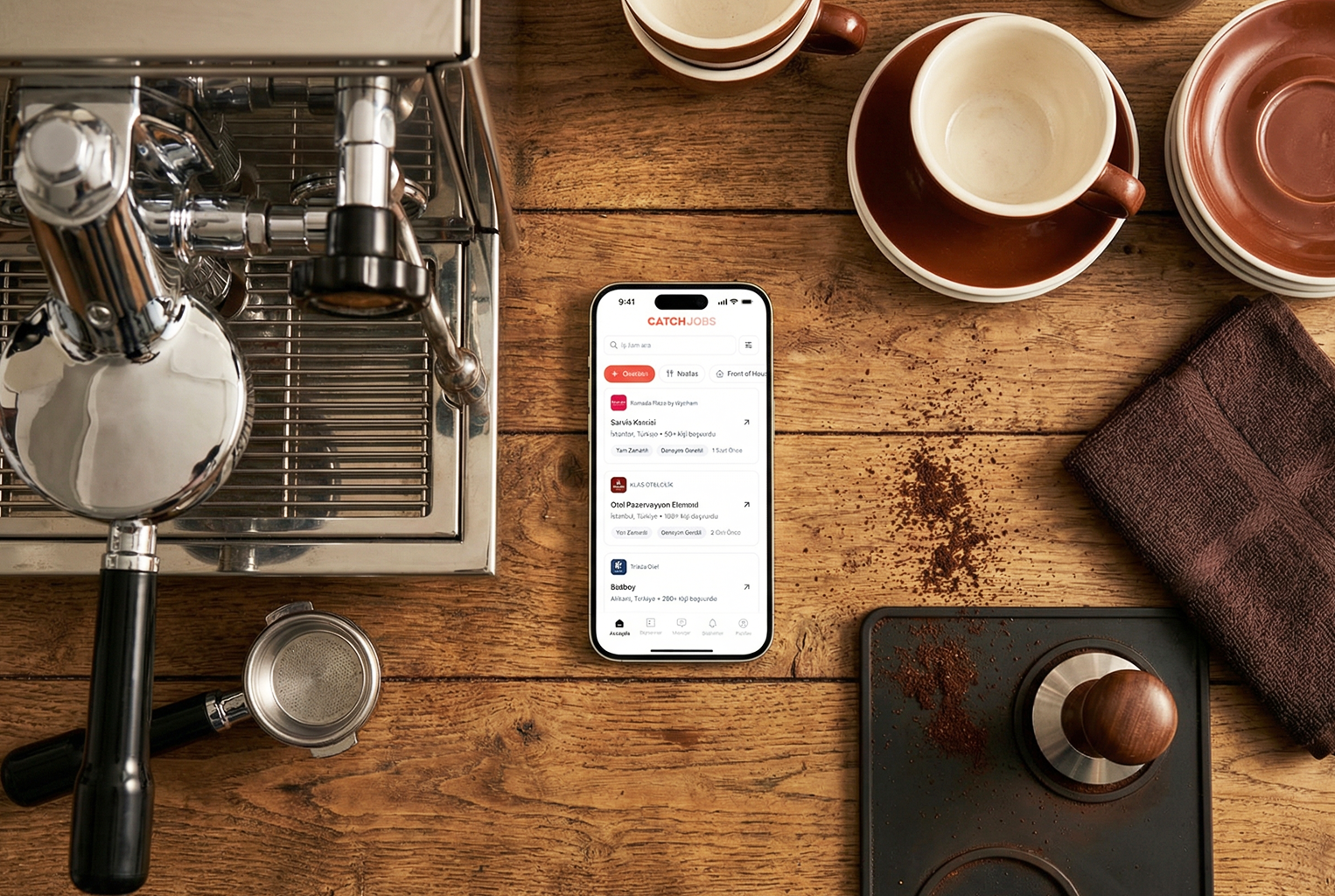
If you feel ready to apply, first turn your strengths into a short story, then make your communication skills visible with your video profile. CatchJobs' hospitality-focused approach aims to help your skills and personality reach employers without being limited to the experience lines on paper. Once you find the right opportunity, your first shift could be the real start of your coffee career.
Browse other topics: